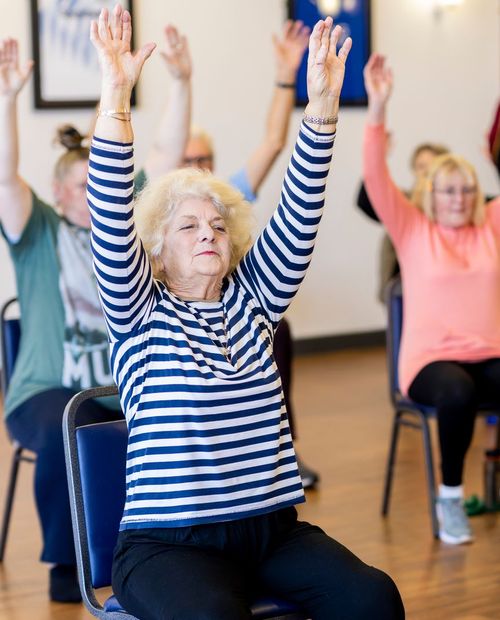
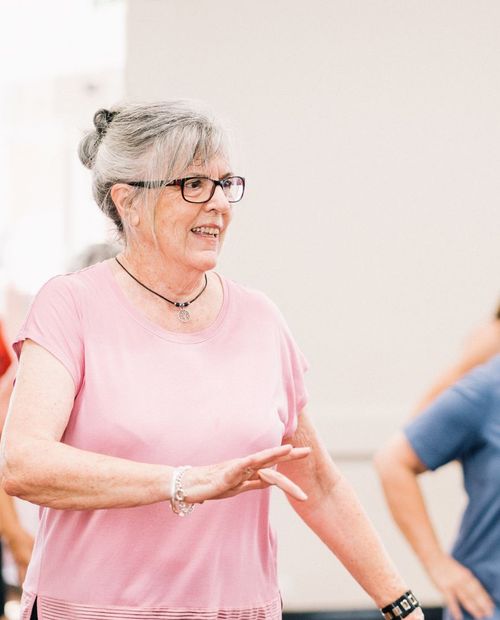
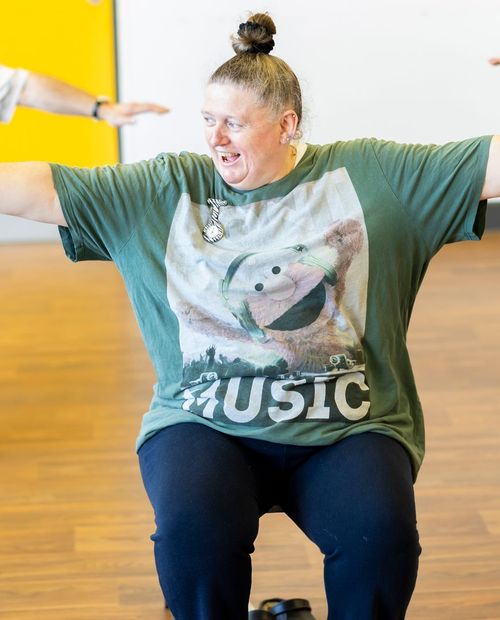
Keep getting up off the floor.
Three things a day, built for people over 60: something to move, something for balance, and a puzzle. Do any two and the day counts. It takes about half an hour on workout days, and a couple of minutes on the others.
Free. No sign-up, nothing to download, no adverts.
35%
fewer falls
Across four controlled trials of 1,016 people aged 65 to 97, this kind of program cut falls and fall injuries by about a third.
30
minutes, six days a week
Plus a walk on Sunday. That is the whole commitment.
4
levels
From holding the counter with both hands to standing on one leg for thirty seconds. You start where you actually are.
Who this is for
You do not want to join a gym. You do not want a class full of twenty-year-olds. You want to keep carrying the shopping in, keep taking the stairs, keep getting down on the floor with the grandkids and — the part nobody says out loud — keep being able to get back up.
That is not about being fit. It is about balance and leg strength, and both of them respond to work at any age. The research on this is unusually clear, and it is strongest in people over 80.
The three parts
Move
Strength and walking
Five strength exercises six days a week, a walk on Sunday. This is the part that keeps you able to get out of a chair unaided.
Balance
What keeps you on your feet
Balance work in the session, plus one thing each day you do while you are already standing still — at the kettle, at the sink. That second kind is what people actually keep up.
Mind
A puzzle a day
A sudoku, a word search, pairs, or a quick round of questions. We are not going to tell you it improves your memory — nobody has shown that. It is here because doing something every day is easier when one of them is fun.
You do not have to do all three. Two out of three keeps the day, and today is never counted against you.
The workout week
Monday to Saturday
The workout
A one-minute warm-up, then five movements that cover the whole body, with a different focus each day so no part of you works hard two days running. About twenty minutes. A chair and a kitchen counter is all the equipment.
Sunday
A walk
Up to thirty minutes at your own pace. Three ten-minute walks count exactly the same as one long one. One day a week that asks nothing of your legs but a walk.
Every single day
Balance, and something for your head
One balance movement, every day without exception — it is the part with the real evidence behind it. Then a puzzle, or something to write down.
Where it comes from
The balance and strength work follows the structure of the Otago Exercise Programme, developed at the University of Otago by Professors A. John Campbell and M. Clare Robertson. The gym sessions follow the National Strength and Conditioning Association's guidance for older adults. The weekly shape follows the World Health Organization's 2020 recommendation of balance training three or more days a week.
We did not invent any of this. We put it somewhere you can read it at half past six in the morning without squinting. All the exercises are here, free, whether you use the daily plan or not.